Friday, October 28, 2011

Don Giovanni is Coming


Non si picca – se sia ricca,
Se sia brutta, se sia bella; Purché porti la gonnella, Voi sapete quel che fa.

The Mets live production of Mozart's Don Giovanni is premiering tomorrow in theaters. Ive been hearing and reading mixed reviews of the opera but it should be interesting. Im also looking forward to seeing the new staging that caused millions of dollars to design. There is a limited showing of the opera, so check it out and tell me what you think. I will also be posting my review of the concert shortly after the concert.


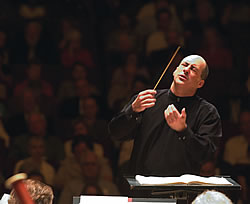
Below is James Levine conducting the overture to Don Giovanni


Friday, October 21, 2011

Thought of the Day...


With the Met's production of "Don Giovanni" coming out next week I thought that this weeks thought should come from Wolgang Amadeus Mozart:
"I pay no attention whatever to anybody's praise or blame. I simply follow my own feelings."
This quote has a deep impression on me because I feel that very often we worry so much about other people's ideas of us rather than connecting and meeting the desires of our own feelings. As you embark on your weekend, follow your feelings and have some FUN!


Thursday, October 20, 2011

Need a Break- Play a Game

If you have some free time play this game sponsored by sporcle.com and test your ability to name the famous composers of these great works. Don't be discouraged... have fun!

CLASSICAL COMPOSERS

CD of the Week: Shostakovich: The String Quartets


The CD of the Week *drumroll* everybody's favorite- Shostakovich: The String Quartets by the Emerson String Quartet. I just can't resist the pure anger and distress in all of the quartets.  Check out this video of the Emerson String Quartet performing the Shostakovich No. 3. AMAZING!


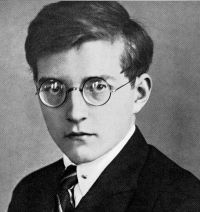
Dmitri Shostakovich was born on September 25, 1906 in St. Petersburg, Russia. He immediately stood out as a prodigy and by 1918 he wrote his first funeral march. Shostakovich became famous in the Soviet Union under Leon Trotsky's chief of staff Mikhail Tukhachevsky, but later had a complex and difficult relationship with the government.
Being heavily influenced by Sergei Prokofiev and Igor Stravinsky, Shostakovich developed a hybrid style, especially shown through Lady Macbeth of the Mtsensk District. This single work juxtaposed a wide variety of trends, including the neo-classical style and post-Romanticism.
Shostakovich's orchestral works include 15 symphonies and six concerto. His symphonic work is typically complex and requires large scale orchestras. Music for chamber ensembles includes 15 string quartets, a piano quintet, two pieces for a string octet, and two piano trios. For the piano he composed two solo sonatas, a set of preludes, and a later set of 24 preludes and fugues. Other works include three operas, and a series of film music.

Monday, October 17, 2011

Celebrating 10 Years

Congratulations to Atlanta Symphony Orchestra conductor Robert Spano for his 10 years of service with the ASO. During my time interning with the ASO, I had several opportunities to meet and work with Mr. Spano and he is truly a remarkable and genuinely nice person. Click on the video below to watch the ASO's dedication video to Spano.

Thursday, October 13, 2011

Race in the Classics


As an African American violinist, I have always been bothered by the fact that there are not a lot of African-Americans and Hispanics within the world of classics (orchestra,opera,dance). Yesterday as I sat in orchestra, I looked around and realized that I AM THE ONLY African-American in the Cornell Symphony Orchestra. In the past, there have been at least one or two other blacks in orchestra but now there are NONE! Now I have to ask everyone, Why is this the case?

From my personal experience, my parents had to struggle and re-shuffle money to pay for private lessons with top symphony musicians, pay to constantly upgrade and the general maintenance of my instrument and endure travel experiences to different orchestra activities. Is this why we don't see minorities, excluding Asians, in today's classical world? Do minorities not have the resources for their kids to be artists or because of the limited resources provided to minorities in general, they aren't willing to take the risk to invest in the kids as artist.

Looking in orchestra, its amazing that classic arts is still classified as a privileged and wealthy craft. But what is most surprising is how orchestra especially is dominated by Asians. A lot of my friends are first generation Asians however, they are still preserving to become the top musicians. I think that it goes far beyond cultural differences and perspectives and basically boils down to expectations. From my experience, in the black community we are not expected to become top artists because it sooo out of the norm. There is no stride to become classical artists. My entire life I have always been asked, "Why not Jazz." My question back is Why not Classical? Because jazz derived from African origins, I guess it is more familiar and seems more 'normal' for minorities to engage in jazz music.

Classical music is simply something that is not taken serious in minority communities and now it is really starting to become a big issue. Although competitive, there are several values, lessons and skills that are embedded within classical music and I really think that minorities need to start exploring these options. I am very familiar with the big outreach programs to encourage minority artists to become more engage in their craft but this clearly an issue that needs to start at the root -our community and our homes.

Wednesday, October 12, 2011

Book: The Healthy Dancer


The American Ballet Theatre just released a book, "The Healthy Dancer: ABT Guidelines for Dancers Health." The book gives easy-to-follow guidelines for teachers, parents, students and trainers. The book is broken into three parts:
Part 1- The Anatomy of a Dancers Body
Part 2-Advice for a Young Dancer
Part 3- Risk Management and Advice for Teachers and how to handle stress

The Academy Award Winner, "Black Swan" is one of my favorite movies, however it brought up a lot of issues that dancers have to face so I am really happy that ABT has released this book. Click on the link below to learn more information and to order a copy. This is a great book to give away for the Holidays!  ABT Book Link

CD of the Week: Reverse Thread


Jazz Violinist Regina Carter released her latest album, "Reverse Thread." This is a great album to keep your spirits high as it starts to get cold outside. Carter is currently on tour visiting cities throughout the country. The album plays on familiar themes with a twist. I saw Carter perform a few years ago and she and her accompanying band have a very distinctive sound. That distinction is very clear in Reverse Thread. Click on Free Download to get a free download from the album, visit iTunes to purchase the album and below is a video of Carter performing excerpts from "Reverse Thread."

Joshua Bell and the ASO

Violinist Joshua Bell is performing the Tchaikovsky Violin Concerto this weekend with the Atlanta Symphony Orchestra. Tickets start at $26.00.
This is defiantly going to be a magical performance. If you are in Atlanta during the time go and check it out!!!

Joshua Bell and the ASO Tickets and Program Notes

Sounds of a New Century

Check out this cool website for the Sonic Festival. The festival is targeted for composers under forty. The first concert is this Friday. Even if you can't make the actual concert the website includes a lot of information for aspiring composers and musicians. SONiC FESTIVAL

Sunday, October 9, 2011

Quote of the Day...

“Music is born out of the inner sounds within a soul; all the music that was ever heard came from the inner silence in every musician.” John McLaughlin


Thursday, October 6, 2011

'Face to Face' Exhibit Now at the Johnson Museum


There is a pretty cool exhibit going on right now at the Cornell University Johnson Museum called Face to Face. A range of haunting and intimate faces from Ancient Egypt and Persia, the exhibit celebrates faces and the pain and joy faces can display. The exhibit is going on until October 30th and would be a great Halloween activity so check it out. 

Below is a link to the Johnson Museum if you want more information. 

CD of the Week: New to Classics DeClassified

My friends always ask me, "What are you listening to today." So I thought I would share with you my weekly favorites.

Log in every week to see which CD's I just can't seem to stop listening to. 

This week's CD is "Valery Gergiev and Mariinsky Orchestra: Tchaikovsky: Symphony No. 4"
I have listened to several different works by Tchaikovsky by the orchestra and by far this is the best interpretation that I have heard thus far. Check out this video to hear and see the orchestra and if you like it, purchase it on iTunes. 


Here is a video with an interview with Gergiev talking about all of Tchaikovsky's Symphonies. 

Lang Lang: Liszt-My Piano Hero Review


In his new album "Liszt: My Piano Hero," Lang Lang presents one of the most ire performances of Liszt that I have heard. Although Liszt is most popular among pianists, everyone can really appreciate every work on this entire album. As I have been reading some other reviews about the album, several people have been arguing that his choice of pieces are pinched, he plays the works at a third rate and he is playing on the piano way too hard and it is taking away from the works in general. I totally have to disagree with this. It is already very clear that Lang Lang is one of the great pianist of our time and he adores Liszt, so I think that his selection choice especially, was well chosen. Every little aspect is taken into consideration with him presenting a cohesive and innovative interpretation of Liszt.

Check it out online and/or purchase it on iTunes and tell me what you think. Also watch and listen to Lang Lang perform Liszt.


Lang Lang is a chinese american pianist who grew up in New York studying at the Julliard School. His studies and talent gave him world recognition and he has been touring the world since he was five years old. Lang Lang has done several recordings of Liszt. Liszt was born in 1811 and became extremely popular for his virtuosic skills as a pianist. As he began to write his own compositions, he model his style after the great composers like Wagner, Saint-Saens, Grieg and Borodin. Through his piano compositions, Liszt helped to expand the knowledge of musical form and ultimately he coined the term 'symphonic poem' which allows a certain movement in a symphony a picture, dance or emotion is evoked on the stage.


Check out this video with clips of Liszt's music and some other composers that were mentioned above. 

Monday, September 26, 2011

SHES BACCKKKK!!!!

Words can't express how excited I am that my ABSOLUTE FAVORITE violinist is back on the stage. After taking a break from her 175 World Concert Tour, Sarah Chang performed with the Pacific Symphony this week. Chang played Felix Mendelssohn's Violin Concerto in E Minor. The orchestra played to bring awareness to global warming; they played a series of works inspired by sustainability such as James N. Howard's "I Will Plant a Tree" under the direction of Carl St. Clair. While walking on the red carpet, Chang announced that she is working on a new album that will be coming out in the beginnning of next year. I CANT WAIT!!!!!


Child prodigy Sarah Chang made her first debut with the New York Philharmonic and Philadelphia Orchestra in 1989. By age ten she was enrolled in the Juilliard School of Music where she studied with popular teacher, Dororthy Delay. With Delay's help Chang was performing throughout the world by eleven years old. Born in Philadelphia to Korean immigrant parents, Chang worked to develop her skills and by age fifteen she was signed EMG records. Chang has been signed to them since and now at only thirty years old she is one of the most popular violinist and most recognize musician in the world. Check out this video of Chang at her finest.

All of the WHITE Lights!

October 20th till November 19th, the Lincoln Center in New York City will be hosting the White Light Festival. Tickets start at $35 (which isn't too bad). Performers will include members from the London Symphony Orchestra, Huelgas Ensemble and speakers like Toni Morrison. I wished I was in the city for this because one of my favorite chorals, "Lux Aeterna" is being performed :( But Check it out and tell me how it goes!


For additional information, check out the link below:

Personal Note


I will like to send my condolences to the family of Troy Davis and Mark MacPhail (the officer who Davis was accused of killing)... Rather Innocent or not this is defiantly a sad case for both families. Hopefully, one day the truth will be revealed...

Piano-Rific: Bilson Concert Review


Malcolm Bilson, a fortepiano specialists and Cornell University professor, performed a collection of freewheeling works by Haydn, Mozart and Beethoven on September 18th at the Cornell University Barnes Hall. Playing each of the works on the standard fortepiano, an attentive listener could easily pick up on not only Bilson’s attention to minor details but also the creative liberties that he took to personalize each work in the performance.


The three movement opener, “Sonata in E Minor” (1784), by Joseph Haydn, involved fluid and light piano melodies. The work begins in E minor with a motive that includes an eight-note arpeggio. The first phrase ends in a half cadence with and then transitions into G major and ends in a half cadence. The main phrase is repeated and then ends in G major until the end of the section. The beginning section returns and modulates to the development that continues to modulate between C major and E minor until the end, when the work moves back to E minor with a small development section.


I enjoyed Bilson’s interpretation of this work. One major characteristic that I found interesting was that each time that he returned to the main theme he exaggerated the dynamics, which helped to shape the melodic lines and to contrast the different textures within the melody. The first movement was my favorite. As the downbeat began in the bass, Bilson intertwined each component of the accompaniment and melody making it clear that he is gearing towards the end of the phrase. Also in the first movement, there were several fermatas that Bilson tended to hold longer than other recordings that I have heard, however, he regained his original tempo throughout the rest of the piece.


Second on the program was “12 Variations on ‘Ah, vous dirari-je, Maman’” (1783), a series of variations on a melody from a French folk song by W.A. Mozart. Today the melody of the work is the same to many children’s works such as “Twinkle Twinkle Little Star.” Apart from the fact that the beginning variations, due to their familiarity, caused laughter among the audience, Bilson managed to give an amusing and spirited interpretation of each variation. Originally composed for solo piano, the first section is the theme and the subsequent sections are variations.


In the variations, I felt that Bilson worked to show some differences that Mozart made between each one. For example, in variation 2, there is a series of non-harmonic tones. In variations 2, 3 and 4 there is a series of cadences. In variation 5 the two voices go back and forth. And in variations 10 and 12 there is a series of diminished sevenths. Although the melody is something that each member of the audience heard since they were children, I felt that it was one of the most important works in the concert because Bilson performed each variation completely different from one another –with its own energy. Ultimately, depending on what sounds and textures a person likes to hear, there was at least one variation that adhered to that.


Third on the program was Mozart’s “Sonata in F Major” (1783), in which, the first movement especially, was my favorite work on the program. Mozart puts few chromatics and suspensions throughout the work to transition the listener into the non-chord tones that come later in the work. Although there is a smooth and continuous melody in the beginning, there is a grand crescendo that transition into the second phrase. Their dynamics then drop back and returns to the first phrase. What I find most interesting is that during the second phrase there is a rhythmic contrast, arpeggios in the accompaniment while the melody continues, that is not found any where else in the piece. I liked that although the melody is an important factor in any piece, Bilson managed to incorporate the accompaniment nicely with the melody in way that they were complementing each other rather than supporting.


Throughout each of the movements, especially in the first movement, Bilson took several repeats. I was appreciative for the fact that he continued to return to the main theme, because although I have heard this piece several times, it was beneficial to hear the melody and the transitions between them each time. Also, each time that Bilson returned to the first phrase, he emphasized the melody in a different way –rather it be emphasis on the dynamics or the small details such as the grace notes. What I noticed most about Bilson’s playing was that during the second and third movements, he continued to mute the fortepiano to play certain sections. Not only did I not realize that the work called for this alteration in sound, but it was interesting to see how it is done on the fortepiano.


Beethoven’s “Sonata in D Minor” (1802) opened up the second half and reinforced Bilson’s commitment to detail. The development began very slow and mellow and then build up to the exposition. Then modulates to the recapitulation until the end, which is fast and very suspenseful. The second movement begins in B flat major and resembles the largo section of the first movement. It continues to stay very steady with lots of rising melodic ideas. The third movement is the climax of the entire work. It re-emphasizes the main melody in the first movement and then transitions into the recapitulation, which has a cadenza in the melody. The melody continues to build up to the climax and then slowly returns to the beginning phrase.


A distinguishing factor of the work is how Beethoven developed the first part, which contains both Largo and Allegro. Due to the two tempos during the first movement, I think that of all of the works on the program, Bilson did an excellent job at distinguishing between the two tempos. I really liked how he used the dynamics to add a more dramatic effect to the tempo change. During the slower passages, the mood was more peaceful rather, during the allegro sections; there were extensive passages of rage and havoc.


Bilson closed the program with “Sonata in E-Flat Major” by Beethoven. The first movement consisted of lots of harmonic color throughout the introduction. The main melody is constantly repeated and then transitions to the development. During the second movement, although common of a scherzo, there were several unexpected playful pauses. Also as the melody carried on, the accompaniment included staccato which added a very interesting texture to the piece. The very serious yet sweet third movement consists of a minuet and trio and the fourth movement is filled with energy and spirited.


I think that during the fourth movement especially, Bilson took full advantage of the lively nature of the work. Although it was fast and upbeat, I liked that Bilson didn’t allow the notes to over power the total character of the work, rather it was clear that he had full control of every aspect of the work. Overall, I really enjoyed the concert. In each of the works, I really felt that Bilson seemed very knowledge about the history behind each of the works. Through his thorough knowledge he was able to produce a very insightful and enjoyable concert.

Thursday, September 15, 2011

Free Concert Announcement

This Sunday September 18th, Malcolm Bilson will be playing the fortepiano at Barnes Hall at Cornell University. The concert will feature works of Haydn, Mozart and Beethoven. And best of all... its FREE!!! Bilson is known across the world for his knowledge and study of the fortepiano. So come and check him out!

LISTEN UP!!

Lang Lang will be releasing his new album, "Liszt: My Piano Hero" on October 4th. Pre-Order it on iTunes Today!

Thursday, September 1, 2011

Can the REAL Phantom Stand Up!

Playbill: Andrew's first year as the 'Phantom.'
This week "The Phantom of the Opera" released that they would not be extending the contract of George Andrews who has been playing Monsieur Andre on Broadway for over 23 years. This week will mark Andrew's 9,382 performance with 'Phantom'. In hopes of brining new blood to the stage, Andrew will be replaced by his son-in-law. If your in NYC check him out and see if he's really too old to play the mysterious Andre.
'

Wednesday, August 31, 2011

Untruths They Told Us about MOZART!

Goodreads: The Cover of Robert Spaething's "Mozart's Letters, Mozart's Life"
You think you know everything about one of the classical greats: Wolfgang Amadeaus Mozart but "Mozart's Life, Mozart's Letters" gives you the first hand account of what was going on in the genius's mind while touring Europe. Check it on Amazon, Barnes & Noble and the audio version on iTunes. Compare to see if what you thought was correct and feel free to comment on your findings and things that surprised you!

Tuesday, August 30, 2011

Cornell Symphony New Members Posted

Cornell University Chronicle Online: Conductor Chris Kim provides one-on-one attention to string quartet
The Cornell University Symphony Orchestra has finally posted its 2011-2012 Audition Results. Under the direction of Conductor Chris Kim, the orchestra is filled with students, both undergraduate and graduate, who come from very different majors looking to play a range of standard classical to contemporary music. In addition to preparing for school wide performances, the orchestra is preparing to travel to Chile this Winter. Stay posted for more information regarding the trip. Click on the "Symphony Results" link to check out this years new members!

Symphony Results